
Property – Infrastructure & Megaprojects · Editorial
By Moakanyi Magazine · Global Issue · June 2026
A country that imports much of what it eats is exposed to every price it cannot control. The FAO Food Price Index, which tracks global food and fertiliser costs, is a running record of the volatility that lands on Botswana's import-dependent table. One practical answer to that volatility is unglamorous property: storage and cold-chain facilities that let the country and its food businesses hold supply rather than buy at every shock. Food security, in the end, is partly a property question.
Food and fertiliser shocks increase the need for storage and cold-chain real estate in a direct way. The ability to store – dry goods in warehouses, perishables in refrigerated facilities – is what lets a buyer time purchases, reduce waste and ride out a price spike instead of absorbing it in full. A country with capacity to store buys on its own terms; a country without it buys on the market's.
Storage as a buffer against price
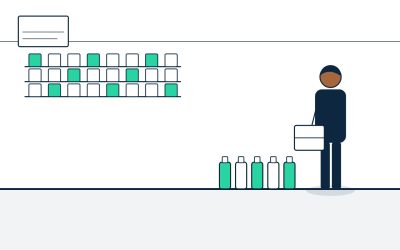
When global prices swing, the businesses and institutions that can store are the ones that can buy at the right moment rather than the urgent one. For Botswana – importing a large share of its food – warehousing and grain storage are not just logistics; they are a hedge built in concrete and steel against the FAO index's worst months. The warehouse that lets a buyer wait out a spike pays for itself in a single bad year.
Fertiliser is part of the same equation. Storing inputs ahead of a price surge protects local production and, indirectly, the food supply that production feeds. The property that holds these goods is doing strategic work that its plain appearance disguises.
Botswana's import dependence makes this exposure structural rather than occasional. A country that grows most of its own staples can ride out a global spike on its harvest; one that buys much of its food abroad meets every FAO swing at the till. Storage does not remove that dependence, but it converts a country from a forced buyer into a patient one – able to fill warehouses when prices ease and draw them down when prices climb. That timing ability is the difference between importing volatility and managing it.
Storage is the cheapest insurance against a price you cannot control.
Cold-chain for value and waste
Perishables – meat, dairy, produce – lose value fast without refrigeration. A functioning cold chain protects Botswana's own production, including beef for the BMC and the EU market, and reduces the waste that turns a supply shock into a shortage. Refrigerated warehousing and transit facilities are a property category whose value rises precisely as food security tightens, because they preserve both quality and the option to wait for a better price.
Cold storage turns perishable supply into something a country can plan around.
A defensive property class
Cold-chain and storage real estate is defensive by nature – it earns from the need to manage volatility, not from a boom. For Botswana investors, that makes it a steadier proposition than discretionary property, with demand underwritten by the structural fact of import dependence rather than the swings of the consumer cycle. It is the kind of asset that earns reliably in exactly the conditions that hurt other property.
The most resilient property earns from the shocks others fear.
The category also serves Botswana's exporters, not only its importers. The same cold-chain capacity that protects imported food preserves the beef the country sends to the EU through the BMC, where consistent quality and traceability are conditions of access, not luxuries. A stronger national cold chain therefore works at both ends of the trade – steadying what comes in and protecting the value of what goes out. That dual role is exactly why these facilities deserve to be treated as strategic infrastructure rather than ordinary warehousing.
For Botswana, the FAO index is more than a foreign statistic; it is a map of the country's exposure and, read carefully, a case for building the storage and cold-chain capacity that turns volatility into something manageable. The facilities are unglamorous, but in a country that imports much of its food, they are among the most strategically useful property assets to own – quiet infrastructure that earns its keep most in the years a country can least afford to go without it.
Sources: FAO