
Every regional policy claim eventually rests on a document somebody can point to, and the useful newsroom question about the 3rd Africa Blue Economy Week, held in Luanda from 22 to 25 July, is not what officials said from the podium but what the underlying record actually supports. SADC's own communication describes the week as elevating the blue economy as a regional growth and investment theme; the contradiction worth examining is how thin the publicly available evidentiary trail is beneath that framing, even as the political statements themselves are unambiguous and on the record.
The single hardest data point in circulation, that more than 3.3 million people across the SADC region depend directly on aquatic resources for their livelihoods and food security, appears in SADC's own account of the week without a cited source study, survey year, or methodology note in the material publicly available [TK]. That does not make the figure wrong, SADC is a credible institutional source and the number is plausible given the region's coastline and population, but it does mean the figure currently functions as an assertion of institutional record rather than a independently verifiable, footnoted statistic, and archive-conscious readers should treat it accordingly until a primary study is identified.
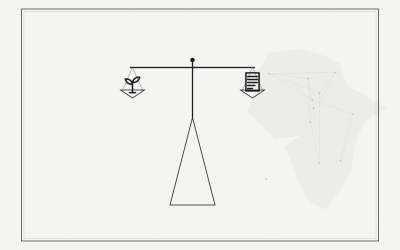
This piece's thesis: the evidentiary record from Luanda is strong on institutional attribution, who said what, in what capacity, at what named event, and weak on the kind of granular, sourced detail, budgets, timelines, baseline data, that would let an independent analyst verify implementation later. That gap is itself the story for anyone building a research or archival record of this agenda.
What the record confirms with precision
Some elements of the Luanda record are precise and independently checkable. The event itself, the 3rd Africa Blue Economy Week, is dated 22 to 25 July 2026 and located in Luanda, Angola, under the theme "From Strategy to Action: Political Leadership for Africa's Blue Economy Transformation." The named speakers are specific and their institutional roles are stated clearly: Esperança Maria Eduardo Francisco da Costa as Vice President of the Republic of Angola, and Ms Angele Makombo N'tumba as SADC's Deputy Executive Secretary for Regional Integration. The SADC news release documenting the week names the Luanda Declaration and Call to Action as the endorsed outcome document, and identifies the African Union, the African Development Bank, the European Union and Norway as institutional and diplomatic participants.
Two standing institutional instruments are also named with precision: the SADC Monitoring, Control and Surveillance Coordination Centre, based in Mozambique, and the Multinational Programme for Improving Fisheries Governance and Blue Economy Trade Corridors, known by its acronym PROFISHBLUE. Both predate Luanda and both have an existing institutional footprint that a researcher could, in principle, verify through separate SADC or partner-agency documentation, though such documentation was not linked within the week's own public communication.
Where the archive runs thin
What the public record does not contain, as of this writing, is a full text of the Luanda Declaration and Call to Action itself, meaning its specific commitments, timelines and accountability mechanisms cannot yet be independently assessed beyond the summary language reported in SADC's own news release [TK]. No budget figures, disbursement schedules, or baseline data against which the 3.3 million-livelihood figure could be tracked over time were published alongside the announcement. For an archive-quality record of this agenda, that absence matters: without a baseline, there is no way to measure, a year or five years from now, whether the blue economy's contribution to regional livelihoods actually grew as a result of anything agreed in Luanda.
SADC's Tourism Programme 2020–2030 offers a useful comparison for how this kind of gap tends to resolve, or fail to resolve, over time. The programme's public documentation confirms it was commissioned by tourism ministers in November 2017 and describes its broad alignment with SADC's development goals, but a landing-page-level summary of that kind similarly does not itself contain granular targets or measurable indicators, those exist, if at all, in the full programme document, which is not the same as the public communication a newsroom or researcher encounters first. The Luanda declaration risks following the same pattern unless SADC publishes the full text and an accompanying monitoring framework.
Building a defensible archive from here
For a newsroom or research desk tracking this story over time, the defensible approach is to treat the Luanda week's political attribution, who said what, in what role, at what dated event, as reliably archived, while treating the substantive figures and commitments as provisional until primary source documents, the full Luanda Declaration text, any PROFISHBLUE project registry, or MCSCC annual reporting, become publicly available. Independent bodies such as the UN World Tourism Organization's Africa programme may in time publish comparative regional tourism and blue-economy data that could serve as an external check on SADC's own figures, though no such cross-referenced dataset was available at the time of writing [TK].
The practical newsroom discipline here is straightforward: cite the institutional record precisely, attribute figures to SADC rather than presenting them as independently verified, and flag every specific commitment, financing amount, or timeline not explicitly stated in the primary source as unconfirmed. One crisp takeaway for anyone building a research file on this agenda: the podium record from Luanda is solid; the paper trail beneath it is still being written.
What comes next
The next evidentiary test is whether SADC publishes the full text of the Luanda Declaration and Call to Action, along with any accompanying monitoring framework or baseline data for the 3.3 million-livelihood figure, within the coming reporting cycle. Until that happens, this file should be treated as an accurate record of what was said and by whom, not yet as a verified record of what was committed and measured.
For researchers, editors and archivists maintaining a running record of SADC's blue-economy agenda, the discipline going forward is to date-stamp every entry precisely, as this one does to 28 July 2026, and to update the file only when a new primary document, not a subsequent restatement of the same announcement, becomes available. That approach keeps the archive honest about the difference between institutional communication and independently verified outcome, which is precisely the distinction this agenda has not yet resolved for itself.
Sources
SADC Source: SADC Secretariat
Institutional Source: SADC Secretariat
Independent / Technical Source: UN Tourism (UNWTO)