
Profiles – Leaders & Changemakers · Editorial
By Moakanyi Magazine · Global Issue · June 2026
A country can mine wealth and still import its dinner. That contradiction sat heavily on Botswana's agribusiness operators this year as farmers and processors faced input-cost and food-security pressure at once, caught between what it costs to produce and what households can afford to pay. The squeeze came from both directions simultaneously, leaving little room to pass costs forward or absorb them quietly.
The pressure was visible in the global gauge. The FAO Food Price Index tracks the world cost of food commodities, and for an economy that imports a large share of what it eats, that index is not a distant statistic. It is a forward look at the till. When it stays elevated, Botswana feels it on the shelf within a season, in the price of bread, oil and the staples that fill a household basket. For a family in Francistown, a number set in a global commodity market becomes, a few weeks later, a harder choice at the checkout, and the agribusiness operator sits squarely in that transmission line.
Input costs squeeze from the back
Every farmer is also a buyer of feed, fertiliser, fuel and seed, much of it imported and priced abroad. When those inputs rise, the squeeze comes before the harvest is even sold. Operators with thin margins discover that a good growing season can still end in a bad financial one, because the cost of producing the crop climbed faster than the price it could fetch at market.
The response was the unglamorous discipline of agriculture as a business: tighter input management, better contracts with suppliers and harder decisions about which crops and herds actually earn their keep. In a high-cost environment, efficiency is not optional, it is survival, and the operators who treated farming as an enterprise rather than a tradition came through the year in better shape than those who did not.
The harvest is sold once; the inputs are paid for all year.
Food security as a national, not just farm, question
Import dependence makes Botswana's food supply a function of decisions made elsewhere, from harvests abroad to shipping costs to currency moves. That is a strategic exposure, not merely a price one. A shock in a distant grain market can reach a household in Maun within a season, and there is little the country can do about it except reduce how much of its plate depends on that distant market.
This is where agribusiness operators carry weight beyond their own books. Every tonne produced locally is a tonne less exposed to that imported volatility. Their expansion is, quietly, a contribution to national resilience as much as to private profit, and it is one of the few levers Botswana actually controls in a food system shaped largely by forces outside its borders.
Local supply is the cheapest insurance against a distant shock.
Where the leadership shows
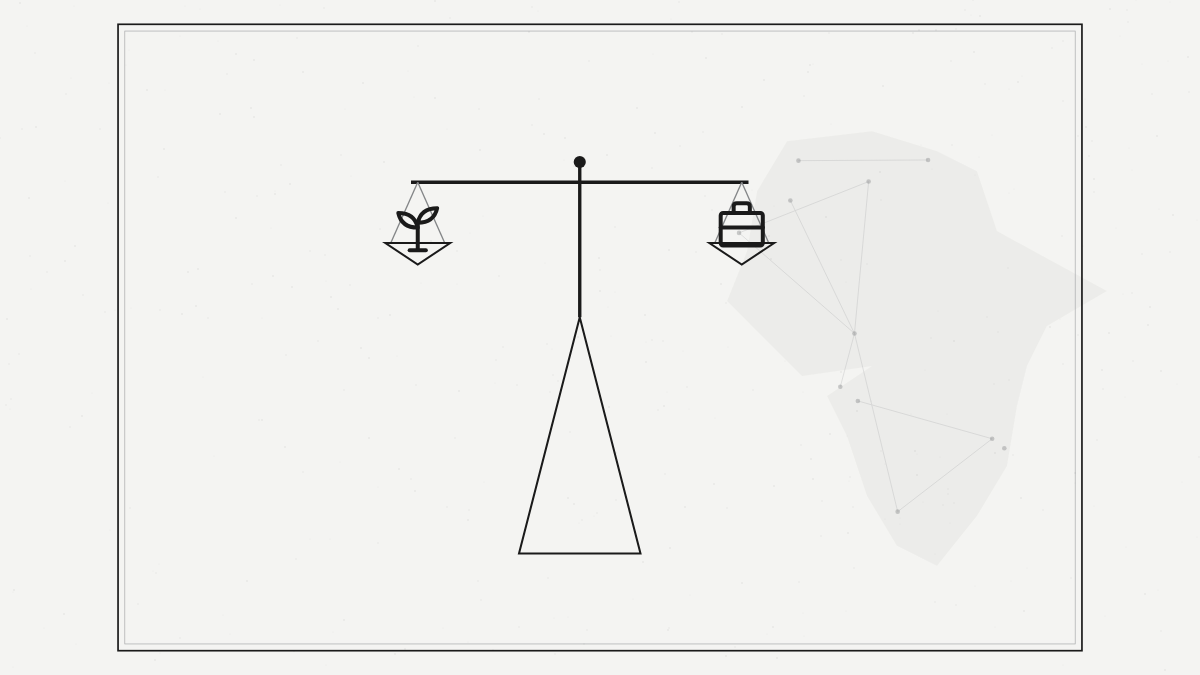
The operators who lead well treat affordability as a design constraint, not an afterthought. They look for the products and processes that hold a reasonable price for consumers without erasing their own margin, and they invest where local production can credibly replace an import. That is harder than chasing a premium niche, but it is also where the largest, most durable demand sits in a price-sensitive market.
That is the harder, longer game behind the headline food-price numbers. Botswana's agribusiness leaders cannot set the world price of wheat. They can decide how much of the national plate is sourced at home, and in a year of elevated costs, that decision was the most consequential one on the desk. The choice between importing dependence and building local capacity is, ultimately, a choice about how exposed the country wants to be.
You cannot set the world price, only how much of it you import.
Where policy meets the farm gate
No agribusiness operates outside the rules around it. Access to finance, the cost and reliability of water, and the terms on which local produce reaches retailers all shape whether a farm can grow into a processor or stays a smallholding running to stand still. The leaders who expand are usually those who found a way through these constraints, not those who waited for them to lift.
For Botswana, the prize is a food system less hostage to a distant index and a farm sector that retains more value at home. That is slow, capital-hungry work, and it competes for attention with faster returns in mining and services. But in a year that showed how quickly an imported plate becomes an expensive one, the case for building capacity at the farm gate rarely looked stronger.
A self-feeding country is built one processor at a time.
Sources: FAO