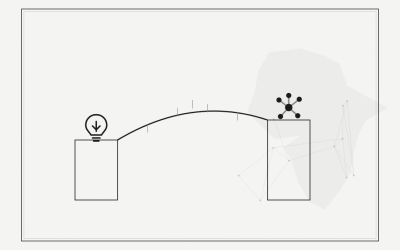

A trade competitiveness programme is, by design, aimed at producers first: the manufacturer trying to meet a standard, the exporter trying to reach a neighbouring market. Whether any of that reaches the person buying the finished product at a shop counter or on a marketplace app is a second and separate question, one launch communiqués rarely answer directly. On 20 November 2025, in Gaborone, SADC and its partners launched the Africa Trade Competitiveness and Market Access programme — ATCMA — an EU-funded, five-year initiative built around value chains, standards compliance and quality infrastructure across the SADC region.
Nothing in the programme's stated focus areas names consumer prices, retail choice or e-commerce access directly. That absence is itself informative. It suggests the theory of change here runs through the producer and the border first, with any consumer-facing effect arriving later and indirectly, if it arrives at all within the programme's five-year window.
The gap between market access and shelf access
ATCMA's confirmed focus areas — regional value chain development, quality infrastructure, manufacturing productivity and product quality, standards compliance, market information systems, and support for women- and youth-owned SMEs — are upstream interventions. SADC's launch announcement describes a programme aimed at enabling producers and exporters to move goods across the region more competitively, not at retail infrastructure, logistics-last-mile delivery, or the digital marketplaces increasingly used by consumers across SADC states to buy those goods.
For a retailer or e-commerce operator, the practical question is whether a more competitive regional supplier base eventually shows up as more product variety or better pricing on their own platforms — and on the evidence at launch, that transmission mechanism is not mapped [TK]. A programme can succeed entirely on its own terms, producing more standards-compliant regional manufacturers, without a single additional product line reaching a consumer marketplace faster or cheaper, if the last-mile retail and logistics layer is left untouched.
What "quality infrastructure" means for the products people actually buy
One of the more consumer-relevant components, if it is implemented as described, is quality infrastructure — the testing, certification and metrology capacity that determines whether a regionally produced good meets recognised standards. For everyday consumer categories such as processed food, personal care products and household goods, that infrastructure is what currently limits smaller regional manufacturers from displacing imported brands on local shelves, because certification and compliance costs fall disproportionately on smaller producers without in-house quality-assurance capacity.
If ATCMA's quality-infrastructure investment lowers that compliance cost for regional producers, the plausible consumer effect is more regionally made goods becoming viable competitors to imports on retail shelves over the programme's five-year run — not necessarily lower prices in the near term, since compliance investment itself carries a cost that producers may pass through initially. That is a multi-year mechanism, not a launch-day one, and no timeline for when consumer-facing effects might appear was given at launch.
E-commerce and the market information gap
ATCMA's market information systems component is the focus area most directly relevant to how consumers discover and access regionally traded goods, since market information platforms increasingly double as the infrastructure e-commerce operators and cross-border traders use to identify demand and supply across SADC states. Improved regional market information could, in principle, help smaller e-commerce operators identify sourcing opportunities across borders that are currently invisible to them, expanding the range of regionally sourced products available on digital marketplaces.
Whether that market information system is public, freely accessible, and interoperable with existing e-commerce and logistics platforms operated across the region, or whether it is a more limited institutional tool aimed at trade officials and larger exporters, was not specified at launch [TK]. That design choice will determine whether the component has any near-term relevance to consumer-facing digital retail at all.
Adoption depends on operators who were not named at launch
The consumer-facing translation of any trade competitiveness programme depends on intermediary operators — retailers, distributors, e-commerce platforms and logistics providers — choosing to source more regionally and pass efficiencies through to customers. None of those operators were named as programme partners or beneficiaries at launch; the confirmed institutional partners are the SADC Secretariat, the European Union, the United Nations Industrial Development Organization and the International Trade Centre, all upstream of the retail layer.
That means the consumer-relevant question for this programme is less "what does ATCMA do for shoppers" and more "which retailers and e-commerce platforms will actively use a more competitive, better-certified regional supplier base once one exists." A retailer with sourcing teams already scanning the region for compliant suppliers is positioned to capture that shift early; one waiting for finished-goods evidence of lower costs will likely see competitors move first.
What comes next
The near-term signal to watch is not a consumer price index but an institutional one: whether the market information system component is built as an open, retailer- and platform-accessible tool or a closed trade-policy resource, and which value chains get prioritised for quality-infrastructure investment first, since consumer categories such as processed food and household goods will only benefit if they are among the early priorities.
For a retail or e-commerce operator, the sensible move now is to track which value chains ATCMA names for early implementation, rather than assume the programme itself will surface consumer-relevant opportunities. The programme is upstream of the shelf. Getting ahead of it means engaging with the same regional producers ATCMA is trying to make more competitive, before that competitiveness becomes visible to every other buyer in the market.
Sources
SADC Source: SADC Secretariat
Institutional Source: SADC Secretariat
Independent / Technical Source: World Bank