
Farming – Agribusiness & Value Chains · Editorial
By Moakanyi Magazine · Global Issue · June 2026
Farming is the only major business in Botswana routinely asked to carry climate, disease and price risk on a single balance sheet with no buffer. A drought, a foot-and-mouth outbreak, or a sudden price collapse can each undo years of work in one season. Agricultural insurance is the mechanism that lets a farm absorb that blow instead of being broken by it.
The risk is not theoretical, and it is rising. Global food-price movements tracked by the FAO Food Price Index add price risk on top of the climate and disease risks Botswana producers already manage, which makes the absence of proper cover more costly with each year it persists. The more volatile the world, the larger the gap that sits uninsured.
Three risks, one thin balance sheet
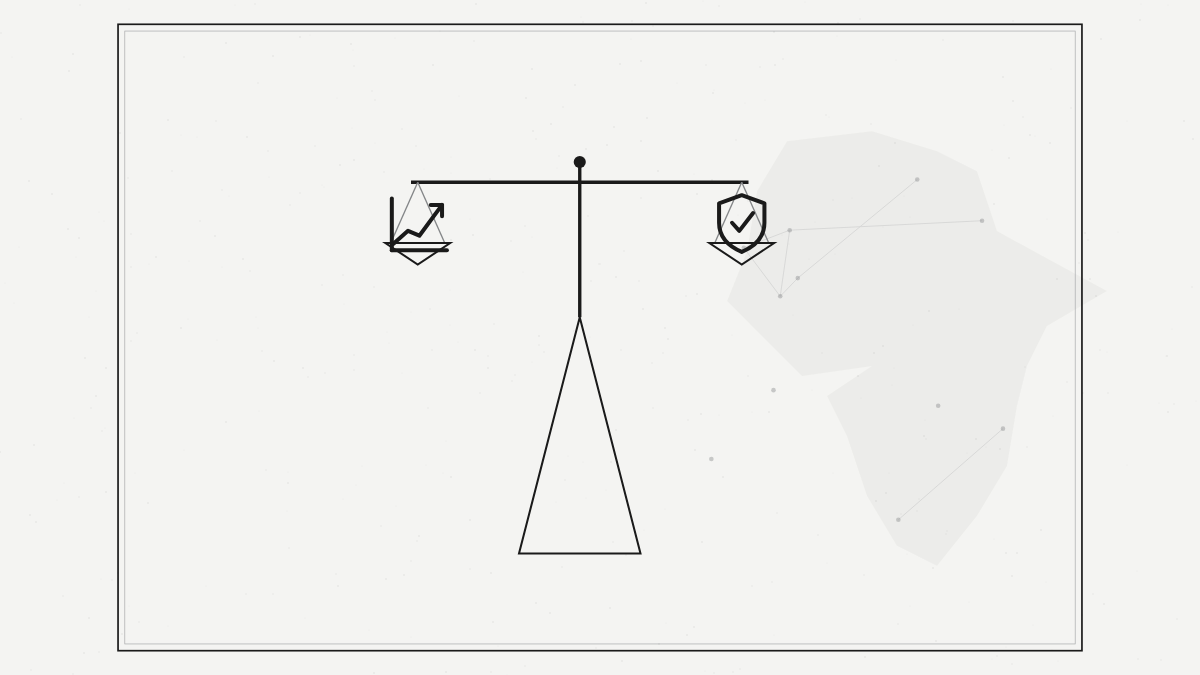
Climate, disease and price are different hazards, but they land in the same place: the farmer's cash position. A producer can do everything right agronomically and still be wiped out by a hazard outside the fence. Insurance exists precisely to separate good farming from bad luck, so that one bad season does not end an otherwise sound enterprise.
What makes farming distinctive is that these risks can arrive together. A drought weakens herds, which spreads disease, which closes markets and drags prices – a single bad year can trigger all three hazards at once. That correlation is exactly what an individual farm cannot self-insure against, because there is no good season nearby to borrow strength from. Pooling the risk across many farms and seasons is the only practical answer.
Good farming and bad luck should not share the same balance sheet.
Why cover is thin where risk is high
Agricultural insurance is hardest to provide exactly where it is most needed, because dispersed farms, patchy data and correlated risks make it difficult to price. That is why so much of Botswana's exposure sits uninsured. Index-based products, which pay out on a measured trigger like rainfall rather than on a farm-by-farm assessment, are one route around that pricing problem.
Index products work because they replace expensive individual loss assessment with a single objective measurement. If rainfall at a reference station falls below a set level, the payout is automatic, with no assessor visiting every field. That keeps costs low enough to make cover viable across a thinly populated farming map, though it does require trustworthy weather and yield data – itself a piece of infrastructure Botswana would need to keep investing in.
The places that need cover most are the hardest to cover.
Insurance as enabling infrastructure
Insurance does more than pay out after a disaster; it changes behaviour before one. A farmer with cover can borrow more confidently, plant the higher-value crop, and invest in improvements, because the downside is capped. In that sense agricultural insurance is not a safety net bolted on at the end but infrastructure that makes the rest of the sector financeable.
Lenders feel this as much as farmers. A bank or CEDA extending credit into agriculture is, in effect, taking on the same uninsured risks the farmer carries. Where insurance caps the downside, the loan becomes safer and the cost of capital can fall. Cover is therefore a quiet enabler of agricultural lending, which is one of the binding constraints on the sector's growth in the first place.
The development of such cover rarely happens through the market alone, because the early years are too thin for an insurer to price profitably. This is where a measured public role fits – not as a permanent subsidy, but as the partner that helps build the data, share the early risk, and bring the product to a scale at which private insurers can take it over. Botswana would be following a well-trodden path, in which the state seeds the market and then steps back as it matures.
Cover does not just pay for losses; it pays for ambition.
For Botswana, better agricultural insurance is a precondition for a more investable farm sector, not a consolation prize for a failed one. As climate, disease and price risks compound, the producers and lenders who build cover into the system will be the ones still standing – and still lending – after the next shock.
Sources: FAO


