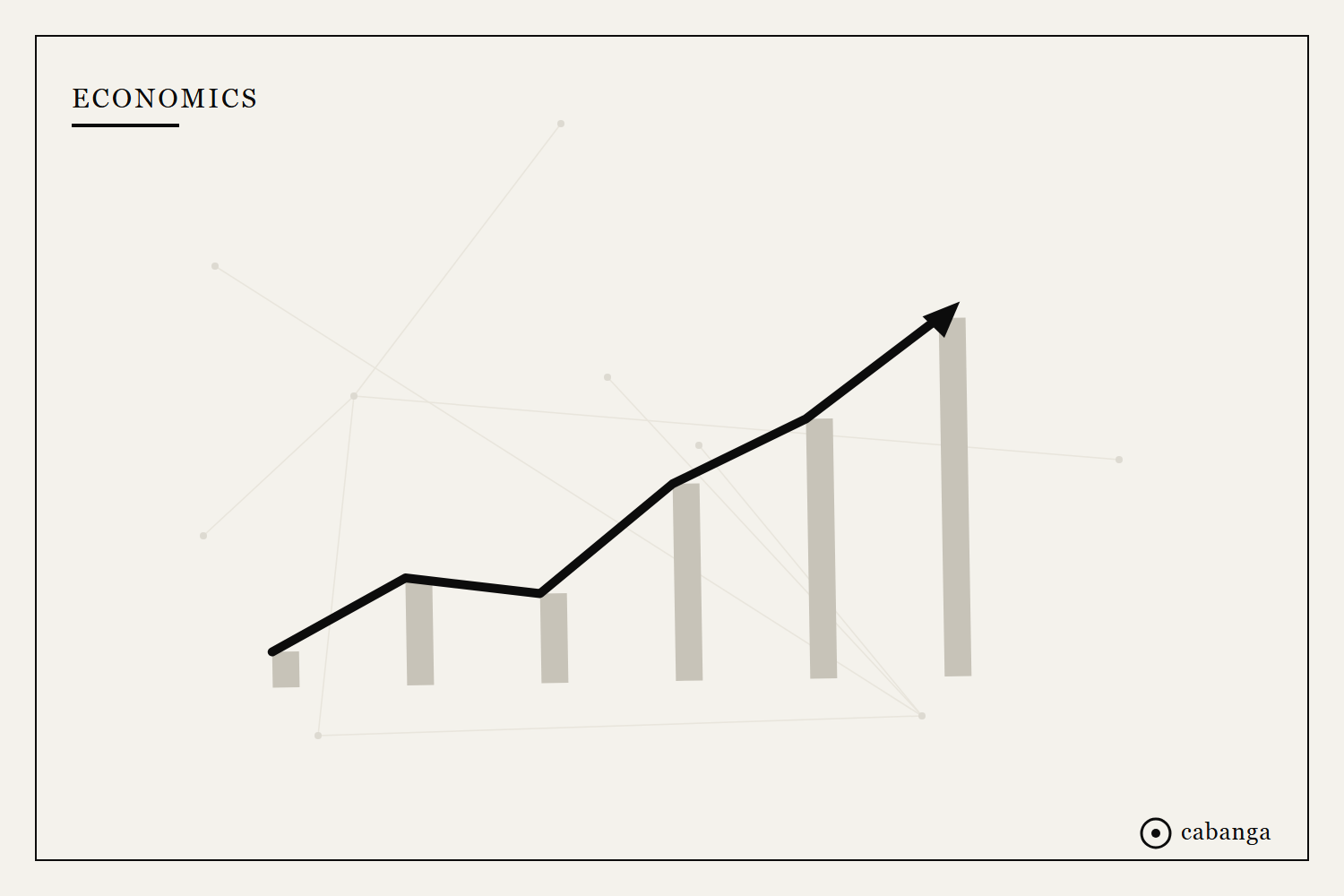

SADC's public institutional record places agro-processing alongside mineral beneficiation and pharmaceuticals as the three sectors chosen to carry the bloc's industrial ambitions. Under the SADC Industrialisation Strategy and Roadmap 2015-2063, the region has set itself a target of raising manufactured goods from roughly 3% of total exports to 50% by 2030 — a jump that presumes an entirely new tier of regionally processed goods finding buyers, most of them presumably outside the bloc's own borders.
That is the contradiction worth sitting with. A fifteen-fold increase in manufactured export share is not delivered by exporting more raw maize, cotton or cattle in the old pattern; it requires factories, standards and buyers that do not yet fully exist. It also arrives against a second, less-discussed number: intra-regional trade among SADC's fifteen member states sits at around 20% of total trade, against roughly 30% for Asia and 60% for the European Union. A region that trades lightly with itself is a difficult base from which to build export-scale processing capacity.
The thesis here is straightforward. Whether SADC's agro-processing push succeeds as an integration project, rather than a set of national ambitions dressed in regional language, will be decided less by the 2030 target than by whether the bloc's internal market opens enough for processors to reach commercial scale before crossing an external border.
Three sectors, one number
The SADC Industrialisation Strategy and Roadmap frames agro-processing as one of three priority sectors, alongside mineral beneficiation and pharmaceuticals. The logic is coherent on paper: these are sectors where SADC states already hold a raw-material base, and the policy bet is that value addition within the region, rather than export of unprocessed inputs, captures a larger share of the final sale price for regional firms.
The 50%-by-2030 target, set against a base of roughly 3%, is the strategy's headline metric, and it is worth being precise about what it does and does not say. It is a share of exports, not an absolute production figure, and the record reviewed does not specify which agro-processed products — dairy, grain milling, edible oils, packaged foods — are expected to carry the bulk of that shift, nor which member states are expected to lead it [TK]. For an operator, the target signals a direction of policy travel rather than a specific addressable opportunity.
The 20% ceiling
Regional competitiveness arguments for agro-processing usually assume a processor based in one SADC state can sell into the other fourteen with minimal friction, achieving the scale that makes a factory investment worthwhile. The 20% intra-regional trade figure says that assumption does not yet hold. Compared with Asia's roughly 30% and the EU's roughly 60%, SADC members still direct most trade outside the bloc — a pattern more consistent with commodity exporters serving distant buyers than an integrated regional manufacturing base.
For agro-processing, that ceiling matters more than for most sectors, because food products are perishable and subject to non-tariff barriers — sanitary rules, certification, packaging requirements — that differ by member state. A processor weighing whether to build capacity for the SADC market rather than a single national one is, in effect, betting on the pace at which the 20% figure moves upward. That number is now more consequential to watch than the 50% target itself.
Productivity as the missing variable
Export share targets are demand-side statements; they say nothing about whether regional agro-processors can produce at a cost and quality that wins shelf space against imports, from within SADC or beyond it. The strategy document emphasises the state's role in creating "an enabling policy and regulatory environment" and in building industrial infrastructure, parks and research-and-development facilities — inputs aimed at productivity rather than trade policy alone.
That framing suggests SADC's own institutions recognise that market access without productivity gains would simply shift where processed goods are bought from, not increase how much gets made regionally. What the current record does not specify is which productivity interventions — extension services, equipment financing, technology transfer — are funded or timetabled for agro-processing specifically [TK]. That gap is where the strategy's credibility will be tested.
Who gains scale, and who is left assessing
The tension is not whether agro-processing is a stated SADC priority — it now clearly is — but which firms and member states move first. A processor already exporting into two or three SADC markets, with compliance systems for varying national standards, holds an advantage over a domestic producer waiting for the target to become a specific programme. The strategy as documented names no participating firms, priority corridors or first-mover incentives [TK], so the advantage belongs to whoever reads the direction of travel earliest.
That is not comfortable for a business waiting for a government-issued list of winners. It is, however, consistent with how regional integration has generally worked in SADC: the framework arrives first, and the commercial map gets drawn by whoever moves before it is fully operational.
What comes next
The next observable test is disclosure — which specific value chains, projects and production or export targets SADC or its member states name as priorities, and which institution gets implementation responsibility for tracking the 2030 goal. None of that detail was available in the record reviewed as of 20 May 2023, and each disclosure, once it happens, is a separately dated story.
For a regional operator, the decision is not whether agro-processing is now a priority — the record confirms it — but whether to start building the cross-border compliance and distribution capability the 20% trade ceiling implies is still missing, ahead of any government naming a beneficiary. The bloc has set the target; which processor builds toward it first will do more to move the number than the document itself.
Sources
SADC Source: SADC Secretariat
Independent / Technical Source: UNIDO