
Southern Africa slaughters tens of millions of cattle, goats and sheep every year, and the region's abattoirs generate a correspondingly large volume of hides and skins. Yet SADC retailers stock finished leather goods — shoes, bags, upholstery — made overwhelmingly outside the continent, while the raw material that could have supplied those factories is exported in bulk, semi-processed at best. That gap between raw-material abundance and finished-goods dependence is the structural contradiction Southern African Development Community planners confronted on 24 July 2025, when the SADC Secretariat confirmed that member states had committed to deeper regional collaboration on the leather value chain.
The commitment followed the first SADC Regional Leather Forum, convened in Bulawayo, Zimbabwe earlier in the week under the joint auspices of the SADC Secretariat and Germany's development agency GIZ, operating through its CESARE programme. Around 50 participants — policymakers, industry leaders, entrepreneurs, researchers and development partners, alongside the African Leather and Leather Products Institute (ALLPI) — met to assess progress on regional policy harmonisation and set out what a coordinated leather sector could look like across the fifteen-member bloc.
For a macroeconomics readership, the interesting question is not whether SADC favours processing more of its own hides — it plainly does. It is whether this forum moves the bloc from stated preference to measurable trade flow, and which firms are positioned to capture the difference.
Where the value currently leaks out
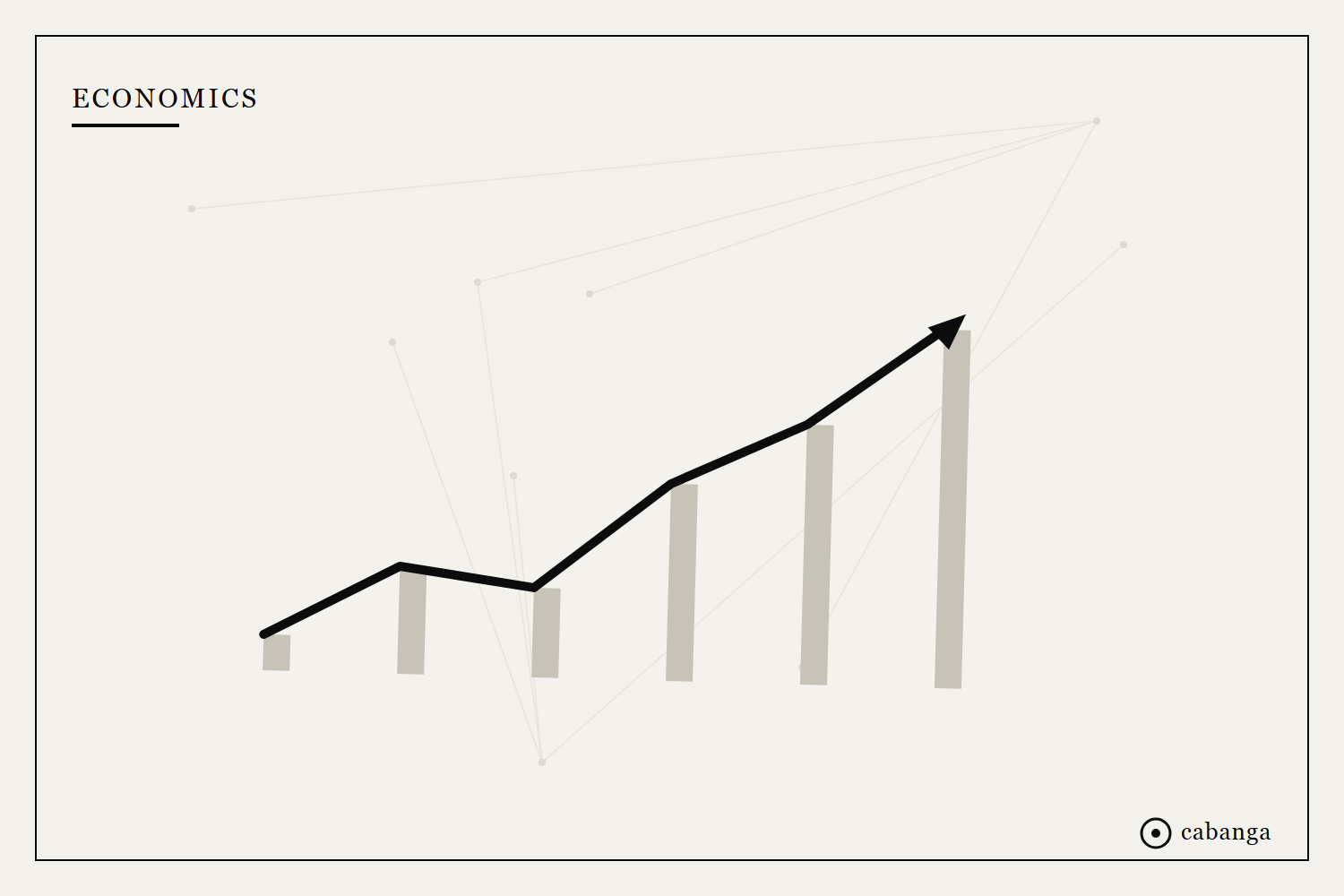
SADC's own industrialisation diagnostics are blunt about the scale of the underlying problem. Intra-regional manufactured exports account for only around 3% of the bloc's total exports, against a strategy target of 50% by 2030 under the SADC Industrialisation Strategy and Roadmap, which also aims to lift manufacturing's share of regional GDP from roughly 12% to 30% over the same period. Leather was named alongside agro-processing and pharmaceuticals as one of the value chains SADC has prioritised for exactly this reason: high domestic raw-material supply, low domestic value capture, and a clear substitution opportunity against imported finished goods.
That framing matters commercially because it identifies where the money currently sits. Raw and wet-blue hides sold across borders capture a fraction of the price a finished, graded leather product commands. The first SADC Regional Leather Forum was explicitly framed around facilitating policy and regulatory harmonisation and promoting cross-border investment and trade — the preconditions, on paper, for hides produced in one member state to be tanned and finished in another without the friction that currently makes such arrangements uneconomic for all but the largest processors.
Who gains scale, and who is still locked out
Tanning and finishing capacity already exists at meaningful scale in a handful of SADC states, and those incumbents are the most obvious near-term beneficiaries of any genuine harmonisation of standards and border procedure: they can bid for regional hide supply the moment cross-border sourcing becomes administratively straightforward. Smaller processors and new entrants face a different calculus. Harmonised standards lower the cost of entry into regional trade, but they do not, on their own, supply the working capital or the tannery infrastructure a new entrant needs to compete.
That is the productivity test embedded in this commitment. A forum that produces a roadmap and a shared policy framework is a necessary condition for a functioning regional leather industry, not a sufficient one. The evidence available — attendance, institutional sponsorship, an explicit assessment of the SADC Leather Regional Model Policy Framework's implementation progress — describes intent and process. It does not yet describe a production or export target specific to leather, or a financing instrument; those specifics were not disclosed and should be treated as [TK] until a dated roadmap appears.
The competitiveness test regional planners actually face
SADC's regional intelligence function on projects of this kind asks a specific question: does the action create cross-border supplier networks and processing capacity, or does it produce another set of parallel national initiatives that never quite connect? The evidence on the ground is mixed in an instructive way. National-level leather strategic-planning workshops have also been under way in Malawi and Mozambique in recent months, run separately from the regional forum. That parallel activity is not necessarily a contradiction — national capacity-building and regional harmonisation can be complementary — but it does mean the test of this commitment is whether those national plans converge on the same standards the regional forum is assessing, rather than producing fifteen slightly different rulebooks.
For a regional operator weighing whether to enter, invest in, or supply the leather value chain now, the honest answer is that the policy signal is real but the commercial infrastructure is not yet built. A firm with existing tanning capacity in one SADC state has more reason to test the harmonisation claim in practice — approaching counterparts in a neighbouring state to explore sourcing hides across the border — than a firm considering greenfield investment, which is still waiting on the roadmap this forum was convened to produce. The quotable takeaway for this readership: policy harmonisation is a discount on the cost of trading regionally, not a subsidy for building the capacity to do so.
The decision an operator faces this quarter
For a business already active in the region's hide trade, tanning or leather-goods manufacturing, this commitment is a prompt to make an explicit choice rather than wait passively: engage directly with the standards process now, while the model policy framework is still being assessed rather than finalised, or hold capital until a published roadmap removes the uncertainty. Engaging early carries a cost — time spent on a process whose output is not guaranteed to be commercially favourable to every incumbent — but it also carries the only realistic chance of shaping a standard before it is fixed.
That calculus differs by firm size and existing footprint. A processor with cross-border ambitions and an established compliance function has comparatively little to lose by engaging with SADC and ALLPI on standards design now. A smaller domestic tannery, by contrast, may reasonably prefer to wait for a finished framework rather than commit scarce management time to a process whose regional scope exceeds its immediate commercial interest. Either choice is defensible; what is not defensible, on the evidence available, is assuming the commitment alone has already changed the competitive landscape.
What comes next
The next implementation test is publication. The forum was explicitly framed as producing a roadmap for the leather sector's continued development, and the credibility of the 24 July commitment rests on whether that roadmap appears with dated milestones, a named funding mechanism, and a clear allocation of responsibility between the SADC Secretariat, ALLPI and individual member-state ministries. Absent that, the forum will read, in hindsight, as one more communiqué in a long list of SADC industrialisation statements.
Operators with an existing stake in the sector — tanners, hide traders, footwear and leather-goods manufacturers — have a narrow but genuine planning window. The firms that engage now with the standards-harmonisation process, rather than waiting for a finished regional rulebook, are the ones best placed to shape the standard rather than simply comply with it once it is set.
Sources
SADC Source: SADC Secretariat
Institutional Source: SADC Secretariat
Independent / Technical Source: UNIDO