
Consumers – Technology & AI · Editorial
By Moakanyi Magazine · China-in-Africa · June 2026
It is easy to read a satellite dish bolted to a village schoolhouse as a screen for football and soap operas. The framing offered by its backers is different: rural television as an information channel – weather warnings, market prices, public-health messaging and national news – reaching settlements that broadband and mains electricity have not.
The pitch: a public good, not a private screen
The continental anchor is the Access to Satellite TV for 10,000 African Villages project, announced by Xi Jinping at the 2015 FOCAC Johannesburg summit and delivered by the Chinese operator StarTimes across 25 countries. Its design is deliberately communal: each village receives two solar-powered projector systems and a digital set for public areas – schools, clinics, churches – plus free decoders for 20 households. The solar element matters in unelectrified settlements: backers say the kit runs for about six hours after sunset. By December 2023 they reported work completed in 20 countries, covering 9,512 villages and over 190,000 households.
The unit of delivery is the village square, not the living room – which is what frames it as access rather than entertainment.
The gap between the brochure and the field
The information-inclusion case rests on the equipment working and the channels staying on. A 2023 Nigerian review found malfunctioning kit and lapsed subscriptions in some villages, and noted thin official data on how many promised sites are live. Free decoders that go dark, or content that drifts toward paid tiers, narrow the public-good claim back toward customer acquisition for a commercial pay-TV operator.
Information access is only as durable as the maintenance budget and the free-channel promise behind it.
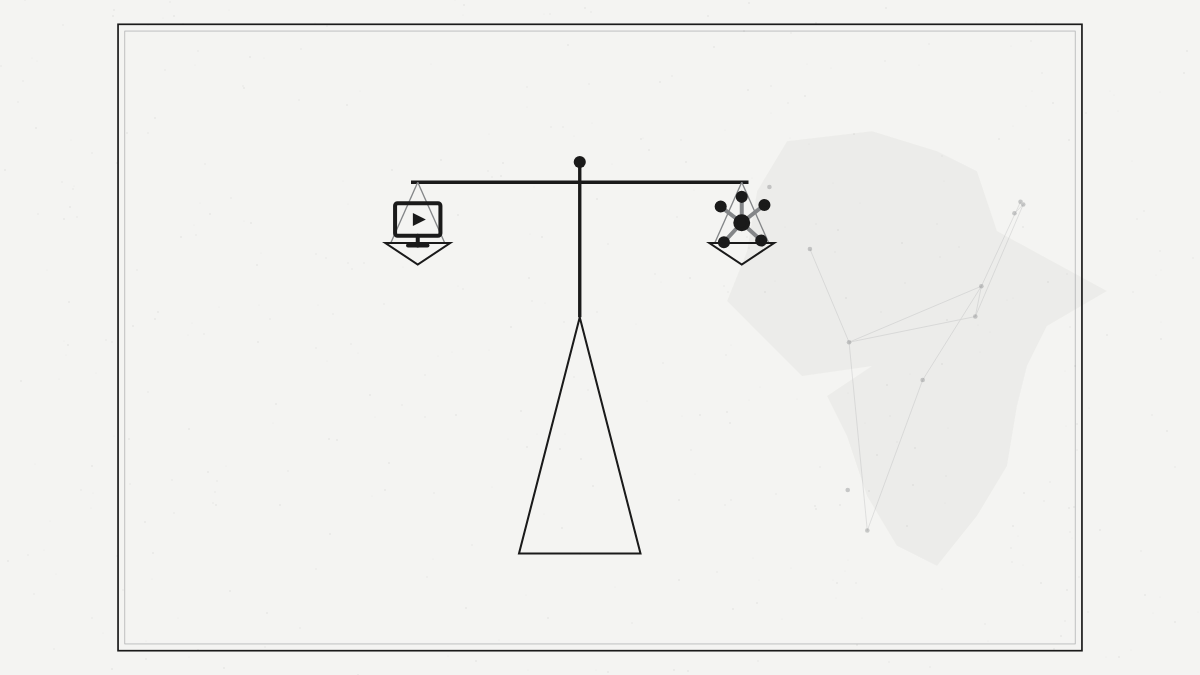
For households a day's walk from the nearest tarred road, a working screen carrying weather and health information is a genuine widening of the information world. The question the record keeps posing is whether that screen stays a public utility or quietly becomes a shop window.
Sources: Wikipedia – 10,000 Villages, Xinhua feature