
Economics – Macro & Markets · Editorial
By Moakanyi Magazine · June 2026
Every commodity economy reaches the same fork: when the export that funds the state softens, does the budget retrench or does it spend its way toward something new. In February 2024, Finance Minister Peggy Serame chose to spend.
Her budget was deliberately infrastructure-heavy, forecasting an economic rebound carried by roads and power. It estimated 3.2% growth in 2023 and 4.2% in 2024, and it accepted a deficit of P8.69 billion to get there. The logic was straightforward: use the state's balance sheet to build the arteries that a more diversified economy would need.
The Bet: Build Through the Cycle
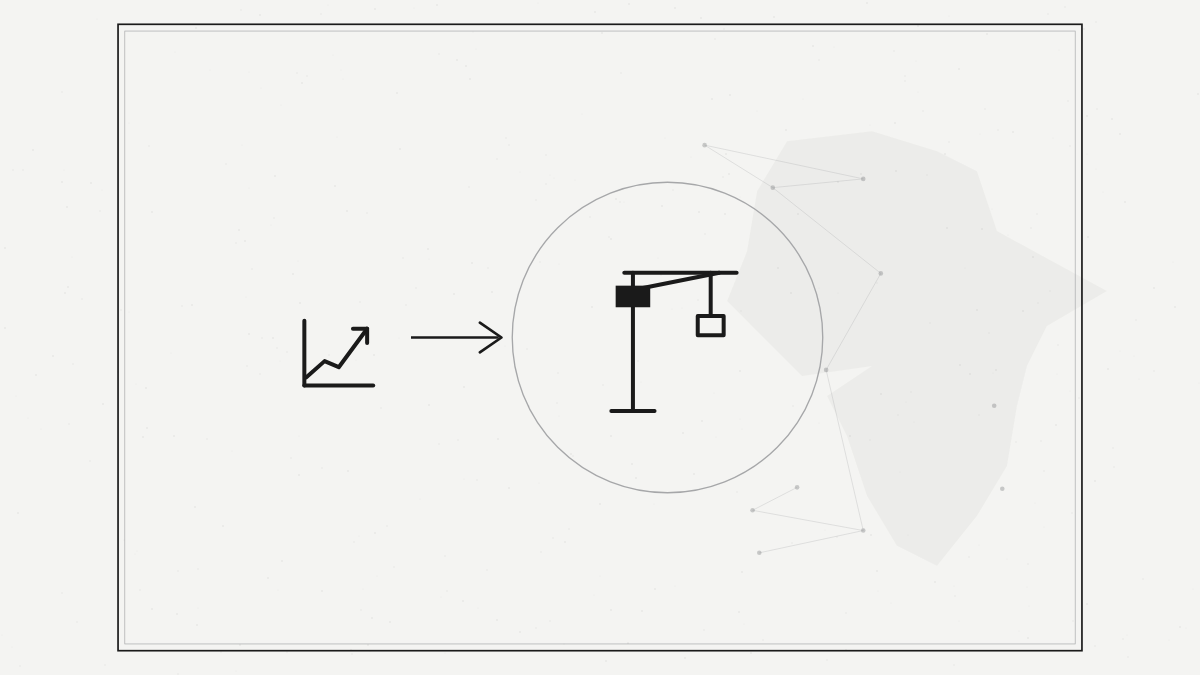
A stimulus budget in a soft year is a bet that public investment can offset private weakness until the broader economy catches up. By tilting spending toward infrastructure rather than recurrent costs, Serame's plan aimed to leave behind assets, the roads and power capacity that outlast the budget cycle that funds them. This is the textbook countercyclical move: when private demand is weak, the state steps in, and it does so most defensibly when the spending creates durable capacity rather than temporary relief.
The 4.2% growth estimate for 2024 was the optimistic edge of that bet. It assumed the rebound would materialise and that infrastructure spending would help carry it, a sequencing that looks confident on paper and demanding in execution. The risk in any such plan is not the intention but the delivery: infrastructure budgets are only as good as the projects that absorb them on time and on cost, and the gap between an allocation and a completed road is where stimulus ambitions are often lost.
A stimulus budget is a wager that what you build today outlasts the slump that funds it.
The Price: A P8.69 Billion Deficit
The P8.69 billion deficit is the explicit cost of that strategy. Deficits are not automatically reckless; the question is always what the borrowing buys. Spending channelled into productive infrastructure carries a different weight from spending that funds consumption, because the former can widen the economy's capacity to grow and, in time, broaden the revenue base that services the debt. A road that opens a region to commerce pays a return that a transfer payment does not.
Still, a deficit is a deficit, and in a diamond-dependent economy it leans on the assumption that revenue recovers to service it. That is the tension inside any build-through-the-cycle budget: the investment case is sound only if the rebound the budget forecasts actually arrives. Botswana's traditional fiscal conservatism and its reserves give it room to run a deficit of this size with more comfort than most peers, but room is not the same as licence, and each year of soft diamond revenue makes the assumption underneath the borrowing harder to hold.
A deficit is only as wise as the assets it leaves standing.
The Choice: Roads and Power Over Retrenchment
The decision to prioritise roads and power says something about how Gaborone read the moment. Rather than treating a soft patch purely as a reason to cut, the 2024 budget treated it as a window to invest in the physical platform that diversification requires. Infrastructure is the unglamorous precondition for the factories, logistics and services that a less diamond-dependent economy would run on, and power in particular is the constraint that quietly caps every other ambition. A manufacturing sector cannot scale on an unreliable grid, and an agriculture or tourism push cannot move goods on roads that wash away.
There is a coherent through-line here. If the long-term problem is concentration in a single export, then building transport and power capacity is one of the few budget choices that addresses the cause rather than only cushioning the symptom. The infrastructure does not diversify the economy by itself, but little diversifies without it. Seen this way, the 2024 budget is less a gamble on a single year's growth than a down-payment on the conditions that any future diversification will need, whatever the diamond market does in the meantime.
You cannot diversify an economy on roads and power you have not yet built.
The Regional Frame: A Familiar Crossroads
Botswana's 2024 choice echoes a debate playing out across resource-led economies in the region. Faced with volatile commodity revenue, governments from the copper belt to the coal fields have weighed the same options, austerity to protect the balance sheet against investment to build a broader future, and the record is mixed. Where infrastructure spending has been disciplined and well-targeted, it has expanded capacity; where it has run ahead of delivery capability, it has produced debt without the assets to justify it. The difference is execution, not intention.
What gives Botswana a stronger hand than many peers is the institutional track record it brings to the choice. A history of credible budgeting and reserve accumulation means a deficit here is read by markets in the context of past restraint, not as the latest instalment of a pattern. That credibility is an asset in its own right, earned over decades, and it is part of what makes a P8.69 billion deficit a calculated step rather than a warning sign. The test is whether the spending honours that reputation by turning into the roads and power it promises.
The same budget choice builds capacity or builds debt, and execution decides which.
The Test: Forecast Against Outcome
The honest assessment of any stimulus budget comes later, when the growth estimates meet the recorded result. A 4.2% forecast for 2024 set a high bar, and the value of the infrastructure tilt does not stand or fall on whether that single figure was hit. The assets remain whether the year matched the projection or not, which is precisely the argument for building through a downturn rather than waiting it out. A road completed in a soft year is still a road in the recovery.
For operators, the 2024 budget is best read as intent made concrete. It signalled where public capital would flow, and a clear signal on infrastructure shapes private planning around it, from logistics to construction to power-adjacent services. A contractor, a haulier or an industrial investor reads a budget like this not for its growth forecast but for its capital programme, because that is the part that turns into contracts, demand and the conditions under which their own plans make sense.
Budgets are read twice: once as forecast, once as the assets they leave behind.
Serame's February 2024 budget framed Botswana's downturn as a reason to build rather than a reason to retreat. The 3.2% and 4.2% growth estimates were the hopeful headline, and the P8.69 billion deficit was the bill attached to the strategy. Whether the specific numbers held is, in the end, less instructive than the choice they encode: that the way out of dependence on a single export runs through the roads and power lines a diversified economy cannot do without. The forecasts will be revised; the question is whether the assets they paid for prove worth the price, and that is a verdict measured not in one fiscal year but in the decade of activity the infrastructure makes possible.
Sources: Reuters