
Intellectual – Frameworks & Theory · Editorial
By Moakanyi Magazine · Global Issue · June 2026
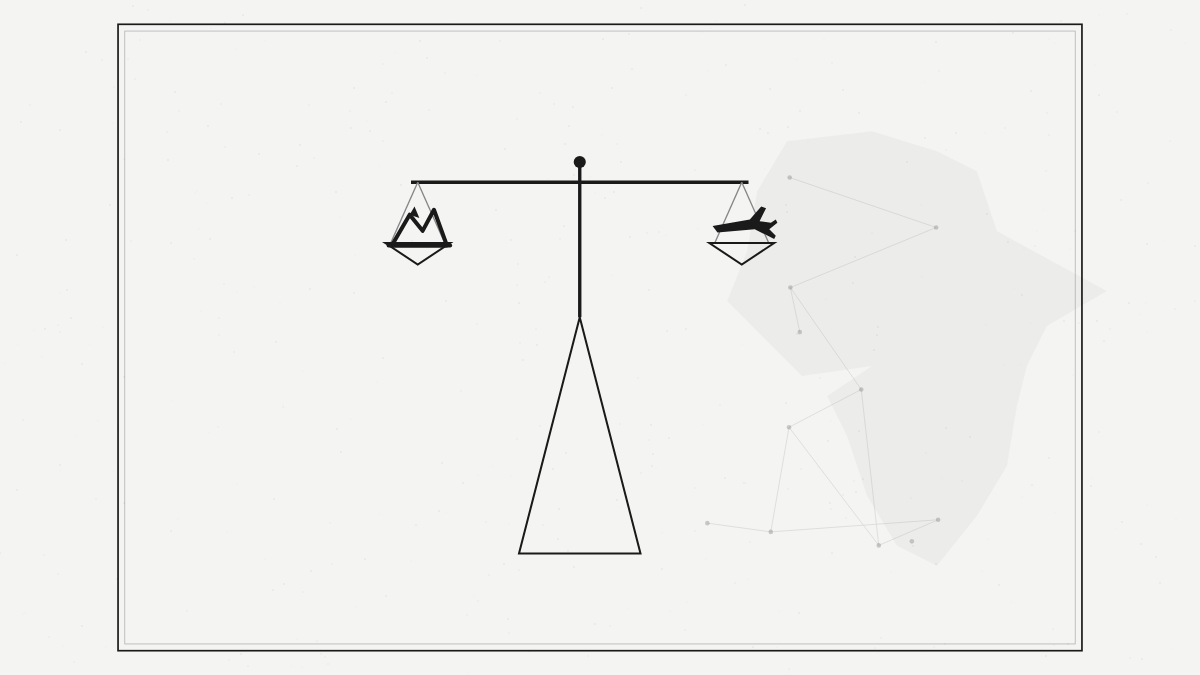
Diversification costs money that a stretched budget does not have, which is why where the money comes from matters as much as the plan itself. In April 2026, Botswana signed energy and mineral exploration deals with Oman, and the deals are worth reading as more than a bilateral milestone. They are evidence for a thesis: that Gulf capital can help underwrite the very diversification a diamond-dependent economy needs, at the moment its own fiscal room is most constrained. The Gulf capital thesis is the claim that this external pool is a genuine, repeatable financing channel for Botswana, not a one-off handshake.
Tested against Botswana's situation, the thesis has to clear two bars before it can be relied on. The capital must be patient enough to fund the long, uncertain work of exploration, and the terms must leave enough value onshore to be worth having. Clear both and the Oman model is a template; clear only the first and it risks becoming a faster version of the old extractive pattern, financed from a new direction.
Why the source of capital matters
Exploration is long-dated and uncertain – exactly the kind of spending a government under deficit pressure struggles to fund from its own accounts. Capital that can wait for a deposit to prove out is therefore worth more than capital that demands quick returns, because it matches the shape of the work. The Oman deals suggest Gulf investors are willing to take positions in Botswana's energy and minerals on those longer horizons, filling a gap that domestic finances, stretched by the same pressures behind the 2026 budget, cannot currently fill alone.
For Gaborone, that makes the partnership a way to pursue diversification without crowding out other spending or adding to a debt load already under scrutiny from the rating agencies. The capital arrives from outside the strained balance sheet, which is precisely its appeal: it funds the future without deepening the constraint that made the future hard to fund. That is the practical core of the thesis – not that Gulf money is generous, but that it is patient and external at a moment when patience and externality are exactly what the budget lacks.
When the budget is tight, patient outside capital is worth more than its face value.
The condition: value has to stay onshore
External capital is only a good deal if Botswana keeps enough of what it funds. The hard lesson from the diamond era is that hosting investment and capturing its value are different things, separated by the terms of the deal. The thesis holds only where those terms – ownership stakes, skills transfer, local participation, beneficiation – leave a durable share of the upside inside the country. Gulf money that builds Botswana's capacity is diversification in the real sense; Gulf money that merely extracts and exports is the old pattern wearing new clothes.
This is the part Botswana controls directly. The capital is external and the global appetite for it is set elsewhere, but the terms on which it enters are negotiated here, in Gaborone, by people who have seen how the previous resource story distributed its rewards. Those terms decide whether the Oman model is worth repeating with other partners or quietly avoided. The leverage of a scarce resource is only as good as the terms it is sold on.
Foreign capital builds a country only on terms that keep some of the value at home.
A template, if the terms are right
Read carefully, the Oman deals are a template rather than a windfall. They demonstrate one concrete route by which a fiscally constrained Botswana can still fund the diversification beyond diamonds that its own economic model demands. The same logic could extend to other capital-rich partners across the Gulf and beyond, provided each deal is judged by the same two tests of patience and onshore value rather than waved through on the strength of the headline number. The thesis is promising; the discipline lies entirely in the negotiating room.
That discipline is what separates a strategy from a sequence of opportunistic agreements. A country that applies the same tests to every deal builds a coherent diversification programme financed by outside capital; one that takes whatever is offered builds a collection of precedents it may later regret. The Oman agreements are most valuable not as a single win but as a standard the next deals can be measured against.
A good deal is a template, and a careless one is a precedent.
The so-what for Botswana is measured optimism. The Oman agreements show that Gulf capital can underwrite the energy and mineral diversification a tight budget cannot fund alone – a real and timely opening for a country that needs to move beyond a single commodity while its own fiscal room is narrow. The opportunity is genuine, and so is the obligation to strike terms that keep ownership, skills and value onshore. Outside capital can finance Botswana's future; only Botswana, in the terms it negotiates, can make sure it owns a meaningful share of it.
Sources: Reuters